


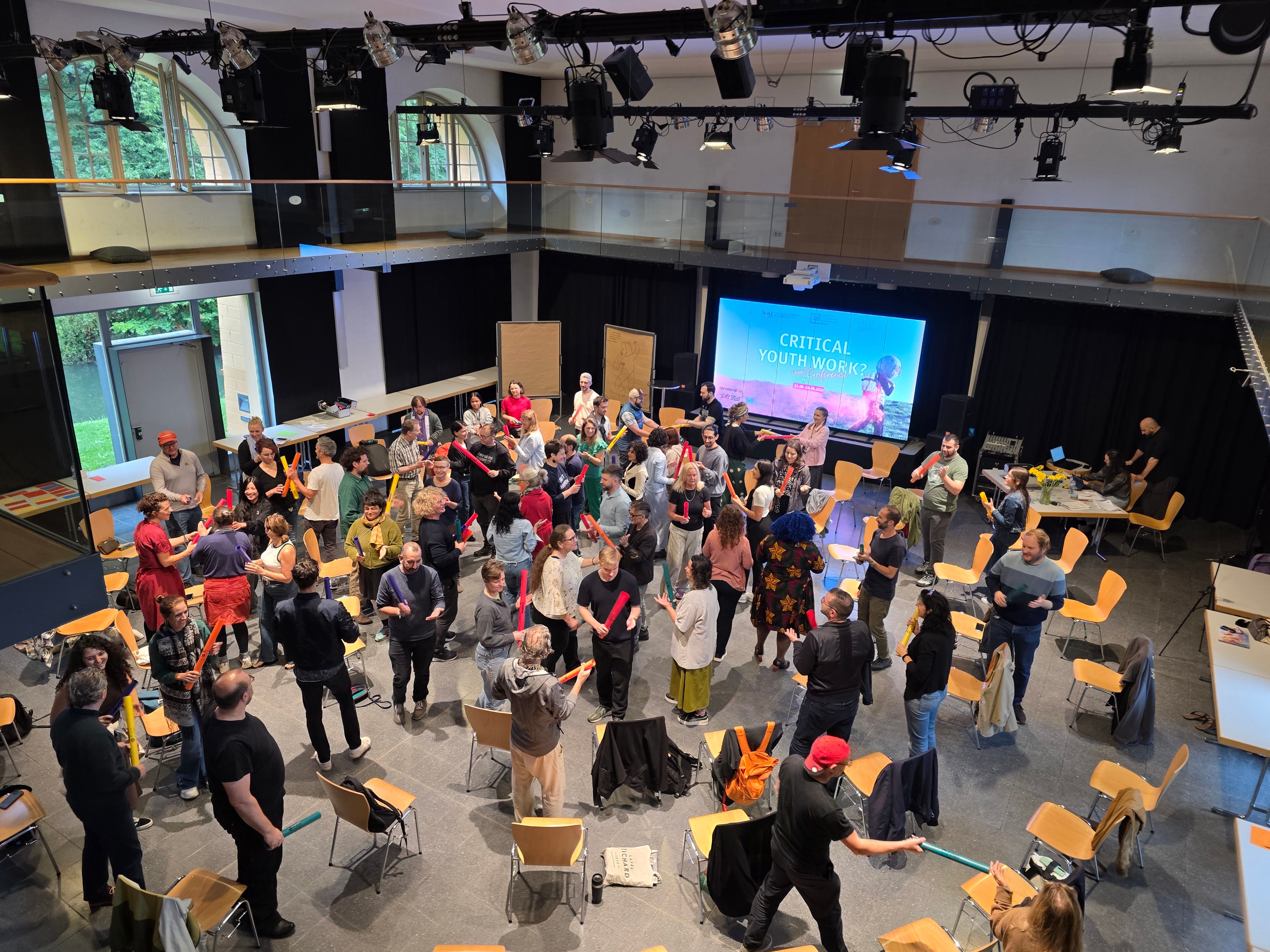
At the Critical Youth Work Non-Conference in Weimar, Germany from August 23-28, 2026, I spent a session with two clowns from Italy.
We began by dancing the elements. Earth, wind, fire, water. Then we paired up, held hands, and without telling each other which element we had chosen, tried to get from one side of the room to the other. If you were earth and I was water, you would ground and I would flow, and we would struggle our way across through the movements of those elements. It was very funny to watch.
Then Linda and Marko—our clown facilitators said something I have not been able to put down.
Being a clown is not about making people laugh. That is not the goal. Being a clown means being in the shit. Staying with the shit. And the shit is fertile.
Later we did an activity where I had signed up to do nothing. That was the whole task. Do nothing. I laughed almost the entire way through, because it turns out that being in the mess of nothingness is far harder than it sounds, and the trying to be in it is itself a performance. Linda and Marko had mentioned before the activity that participants should not ‘act’ the performance is ‘being.’
I sat with that for the rest of the conference. Not just because it was clever but it was counter intuitive. Reminding me of something we have been doing at Street Project Foundation for eighteen years without labelling it.
Nobody planned the tension
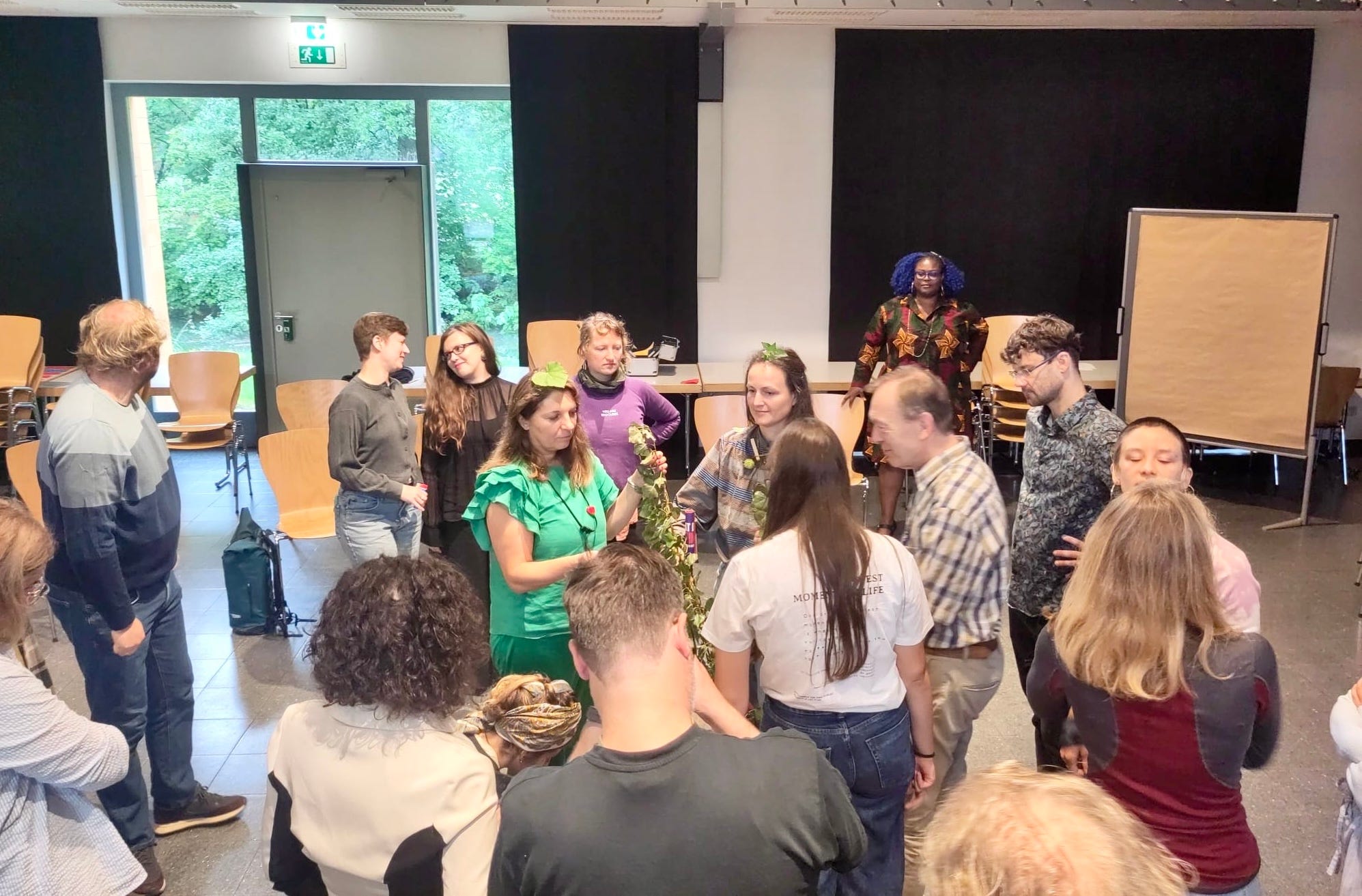
The day before, I had run my own PlayShop on play as resistance, sharing how we do critical youth work through ARTvocacy.
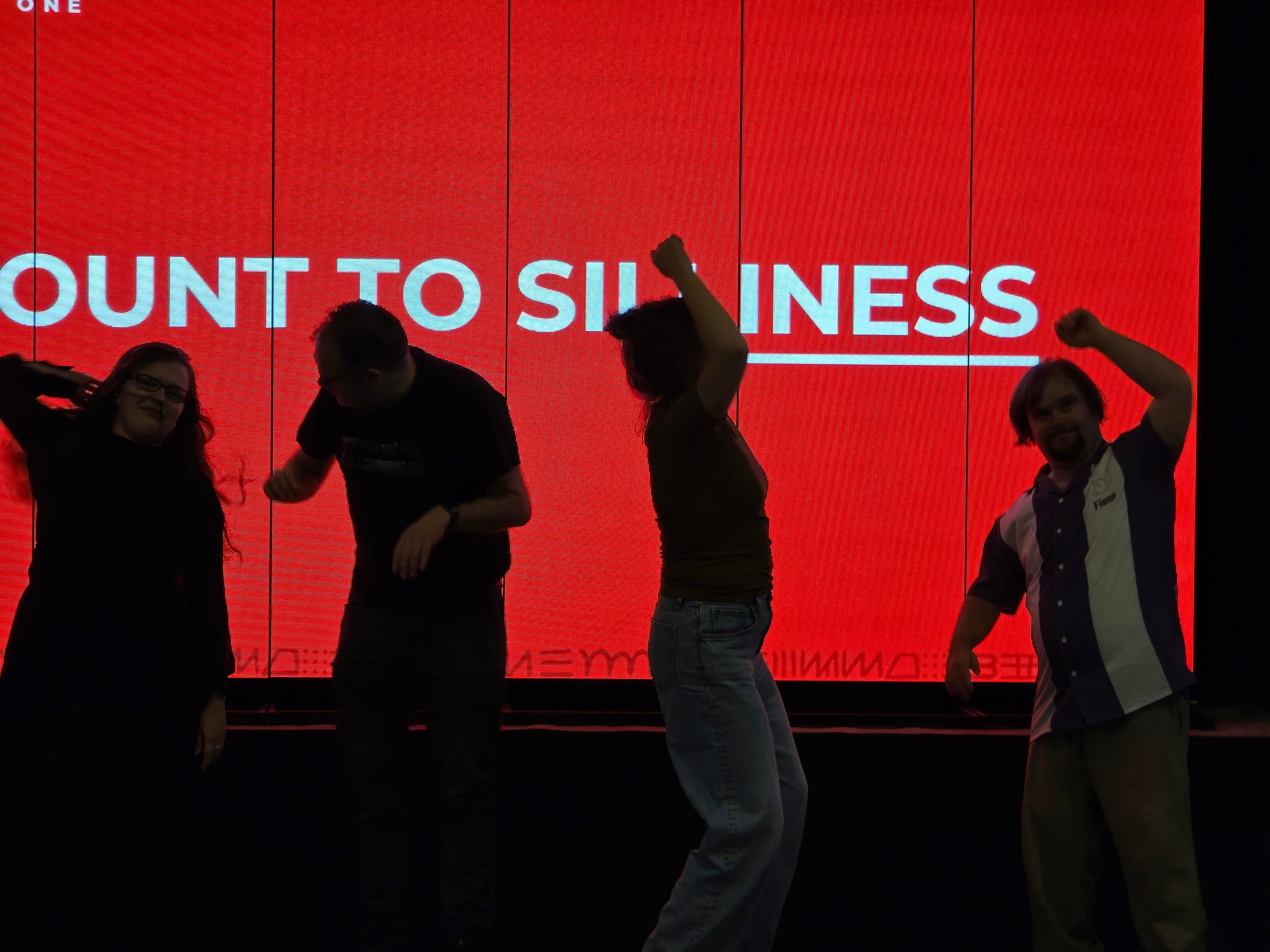
We started with Count to Silliness. You count to five, clapping as you go, and then every number has to become a sound and a movement. Five movements, five sounds, presented back to the group. Then I gave them emotional direction. Do it again, but a lion is chasing you through the jungle. Watching adults commit to that is one of the pleasures of this job.
Then came Crazy Exploration. I sent everyone out for five to seven minutes to find something unique and bring it back.
One participant brought back another human being. Another brought back herself, because she saw herself as unique. Both answers were true, and both were better than anything I had anticipated.
The group of twenty five people then had to co-create something from everything they had gathered. They did. Everybody seemed agreeable while they were making it.
The trouble started when we talked about it.
People inside the group began raising negative associations with imagery that the group itself had just produced. Then I asked who would speak on behalf of the group, and everybody pointed at one person, someone they had read as male. One of the ladies played the gender card and stated that she was unhappy that everyone pointed at a man. I learned afterwards that he identifies as non-binary. So what do you make of that?
So within twenty minutes of creating something together, the group was already resisting what it had made and questioning who had been handed the right to speak for it.
Nobody planned those tensions. They emerged because people were creating together.
That is exactly why we use activities like this when we teach community organising and movement building. They put young people inside the complexity of leading among other people: the negotiating, the communicating, the disagreeing, the noticing of who gets chosen and why. Those are not obstacles to democratic practice. They are democratic practice.
Isn’t that also organising? Isn’t that politics? Isn’t that what happens whenever you try to build something with other human beings?
How free are we, actually?
One conversation in Weimar has stayed with me as much as the clowns did.
Several European youth workers spoke about the bravery it takes to build something like ARTvocacy, and about how difficult that feels when your projects are funded by your own government. There can be a pull towards designing along the lines of what the funder wants rather than what young people need.
My response was that they should not beat themselves up about it. But I also said something I had not fully articulated before. Street Project Foundation receives most of its funding from foreign organisations rather than from the Nigerian government, and that may well be part of where our boldness comes from. We are not trying to pander in quite the same way. That financial freedom is not a small thing.
It raises a question the whole sector should be sitting with. How free are we to create the work that young people actually need, when the people paying for the work have their own ideas about what it should look like?
It is not foolproof
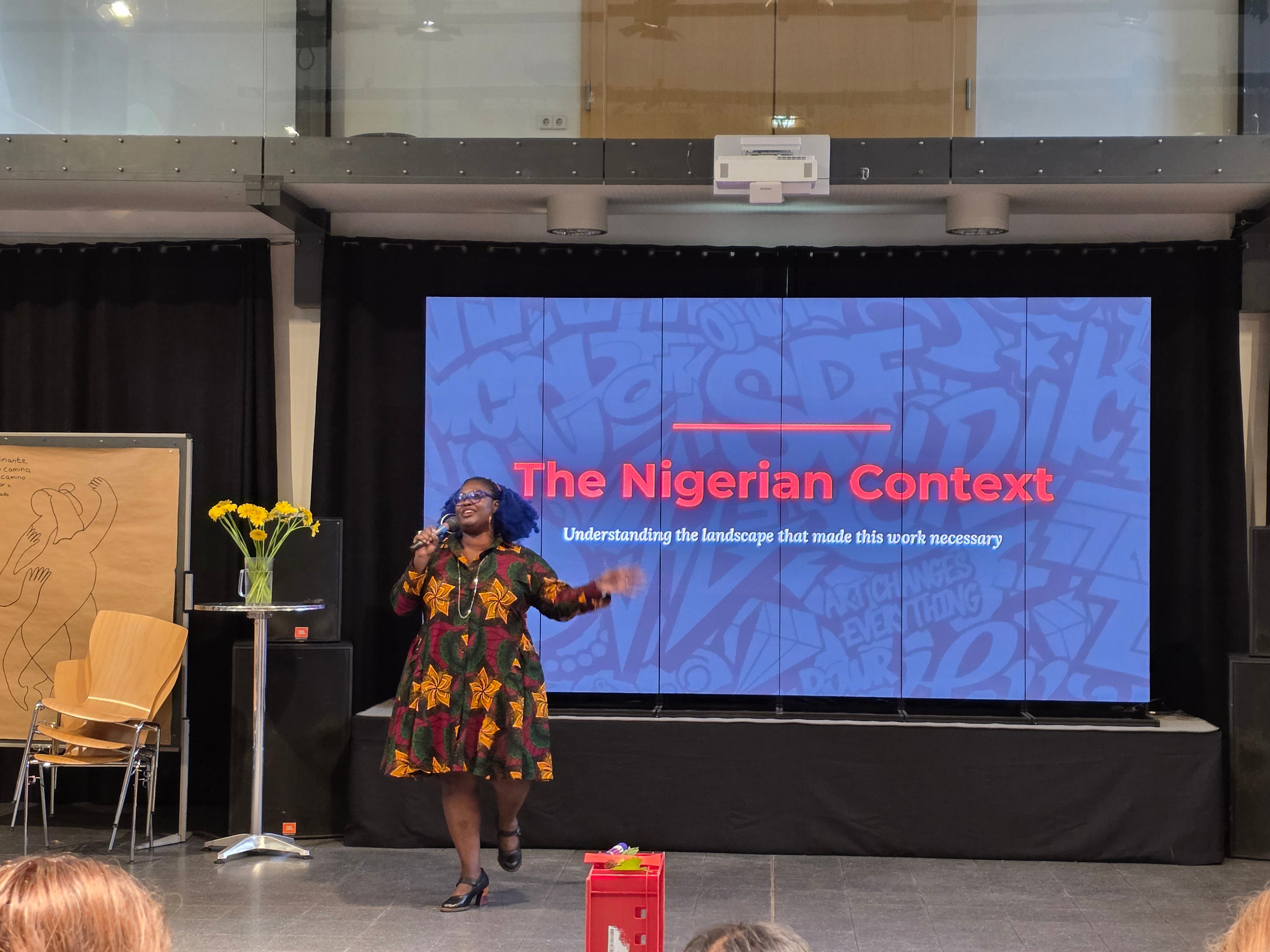
I was glad to be able to say, in that room, that our approach is not foolproof.
Power and influence for the young person remain unresolved. We cannot pretend that because something is participatory, creative and playful, power has quietly left the room. It has not. We are now exploring legislative theatre to see whether we can move beyond conversation and creative expression towards actually influencing policy. There are still tensions. There is still work to do.
When the feedback came in, several people mentioned my optimism, and said it felt honest because they could see the results of it. I found that interesting, because my optimism has never meant that I think everything works. It means that even inside the mess, we keep creating.
What youth work could become
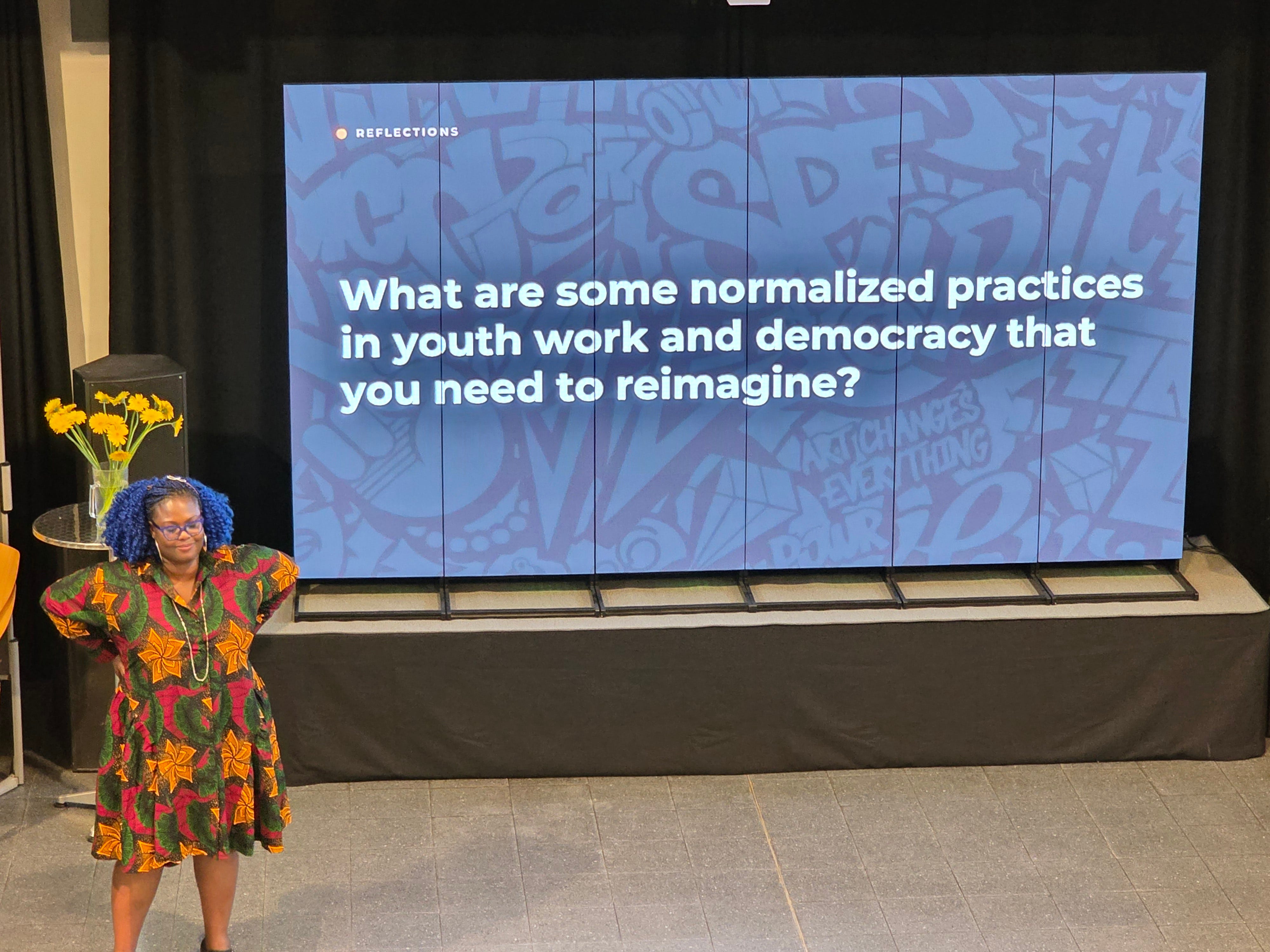
The conference was full of people doing this work under far heavier conditions than mine. A documentary from Egypt, made by young people, telling the stories of Palestinian families who fled for medical care. A session from Lebanon on resilience, and on when the language of unrest becomes the language of war. A visual arts model called Ritirati, where people who share no common language paint together and end up with one piece of work between them.
Every one of those sessions was doing the same thing in a different key. Creating inside conditions that nobody would have chosen.
So I keep returning to the question I posed in my own session. What in youth work and democracy needs to be reimagined?
If our work is only preparing young people to survive inside the systems they inherited, we should say so honestly. Some of those systems need questioning. Some need reimagining. Some may need to be built again from scratch. That is where play earns its place, and not as an escape from complexity. As a way into it. A way to make something together, look at what you have made, disagree about it, negotiate, recognise where the power sits, and imagine that something else might be possible.
We are not waiting for the mess to disappear before we create. We create inside it. We play inside it. We question inside it.
And perhaps, as two clowns from Italy would have it, that is where the fertile ground has been all along.

Rita Ezenwa-Okoro is the Founder and Lead Visionary of Street Project Foundation, a creative arts based youth development organisation in Nigeria.
Great piece to be shared!